I´ve been getting alot of concerned messages from folks asking me for updates and pictures and such of the most recent leg of the journey. I've been a little slow as of late, so apologize to you folks that have been frantically hitting the refresh button until your browser crashes (protip: don´t use Internet Explorer to look at this blog, for some reason it can't handle my careful arrangement of pictures). Ecuador has been too much fun...the Hawaiin climate and all the free fruit from the locals has made this the most easy-going and nutritious segment of the adventure thus far. Needless to say, I've been reluctant to sit in front of a computer and work out another entry for you folks. The weather outside is too perfect. But I'm getting ahead of myself.

Let's get back to Northern Perú for a moment. With the steepest and longest climbs of the country behind me (hopefully for the rest of the journey), I was back to mercifully flat, paved roads and 120 km days on the highway. The oppressive heat and the dearth of all vegetation from Chimbote to Chiclayo was not exactly an enjoyable experience seeing that I had nothing to feast my eyes upon besides exhaust and roadkill. However, I was eating up kilometers like a fiend, and within two days, I was back in dense Peruvian jungle, where the roadside was littered with parakeets that were about as photogenic as Bolivians.
 |
| Roadside pyramids in Túcume...no big deal in Perú |
It didn't really occur to me that my trip through Perú was coming to a close. Compared to a lot of other ciclistas in these parts, my trip through the country was short thanks to a few rides in haulers up some challenging ascents. No sweat off my back. However, I probably missed out on a lot of interesting sites and stories to tell. This country is geographically vast, and it's history is...vaster? Sorry, my vocabulary is a little stilted due to all this spanish talk. I found some Umberto Eco in english at my current residency so I hope to get my skills back once I get "The Prague Cemetary" out of the way. Wishful thinking.
 |
| Good samaritans |
The other great thing about being back in the jungle is the rain. "Double-u tee eff" you might be thinking, but mind you, the temperature gets nice and toasty in these parts, and since seven plus hours a day on a bike with no spare clothes to change into is not going to have the ladies tearing out each other's hair to get to your swedish bits like some kind of Axe spray-on poison commercial, getting doused with heavy jungle rain is something that one learns to relish, especially since the rain water this close to the ecuator is about as warm--if not warmer--than some of the shower faucets in these parts. In Ñaupé, my caveman cleansing was not a custom shared by the locals, who quickly pulled me out of the rain and furnished me with dry clothes, some flat Sprite, and a place to stay for the night. The night was warm enough that all my things were more or less dry by the next day. Then came the dreaded saga of Píura...

I am five km's outside of the city when I see a group of five individuals at the side of the road. I don't think anything of it and continue past them at a chill pace. Soon enough, one of these high-school kids jumps ontop of my trailer while another takes me by the waist gingerly enough not to dismount me, but firm enough to start rummaging through my pockets. He's not coming off anytime soon, so I bring the u-lock down on his nose and he finally lets go, along with his friend. The five of them run off into a grand junkyard and I stop to check my things. My camera and wallet are still zipped tight in my pants, but my tunebox is gone, and with a fully loaded bike, the DreamCrusher is in no condition to give chase. I find the nearest police station to see if I can get some help finding these runts, but other than offering me a place to stay for the night, there's not much the police can do besides assuring me I will not be arrested for assaulting a minor.

While other tourists might shrug off a stolen ipoop as no big deal and thank The Seven that their passport and wallet wasn't stolen, I--as a cyclist with an excess amount of testosterone--will not allow such a slight to go unpunished. The next day, I return to the same location and start talking to pretty much every local I can find, describing as much as I can about these kids and asking if anyone has seen these sketchy looking so-and-so's walking around lately. It's not long before I find out where one of the kids works at night (the very same junkyard in which they made their escape). I also discover a sympathetic taxi driver named Samual who not only knows exactly who I'm talking about, but also had his money pouch stolen by the same kids a week before. We join forces and head to the junkyard to ask the whereabouts of one of the kids. We get an address from the boss and head a few miles up the road to a shack, where Samual politely describes our situation to the mother of two of the robber muchachos. After we help her move some fresh water inside her house, she agrees to take us to where the five robbers hangout in town. These kids were not expecting to see the two of us again, let alone with their own momma at our side. After we reassure them that we were not bringing the police, one of the kids with a bloody rag stuck to his nose brings out the driver's money pouch and my tunebox. This kid, with a nasty crusty blood soaked rag wrapped tight around his snout, has the chutzpah to tell me that he and his friends weren't the robbers, that someone else sold them the goods for 20 soles ($7.50). Some people. Anyway, the day was a success, and the moral of the story is as always "yes we can".
 |
| The ugly mug of victory |
Not exactly the ideal way to wrap up the Perúvian leg of the journey. The whole episode left me in a rabid state of paranoia in which I found myself sprinting through populated areas and clutching the grip of my u-lock anytime I caught what could be mistaken for an avaricious glance from suspicious individuals at the side of the road. I had to shake off this terrible hex before I reached the border, or else my experience in the country might be spoiled forever. So I ate some awesome ceviche in Mancora and all was well again.
 |
| Ceviche...I will miss thee |
|

In no time, I was in Tumbes, almost the last stop in Perú, and passing over a border fenced off by an endless horizon of banana trees. In this flat coastal land, you can actually smell Ecuador before you see the first sign for the border checkpoint. You know you're close when that sweet delicious smell of rotting fruit fills your lungs. Upon laying thine eyes upon this land ripe with growth of every sort...I don't know how to describe the sensation. I guess I felt right at home. Herzog might have wished at one point for this place to shrivel up and die, but I can't help but notice some paleo-nostalgia when I roll through this jungle paradise. We're all howler monkeys at heart, aren't we?
 |
| This guy was big enough to eat a chihuaha |
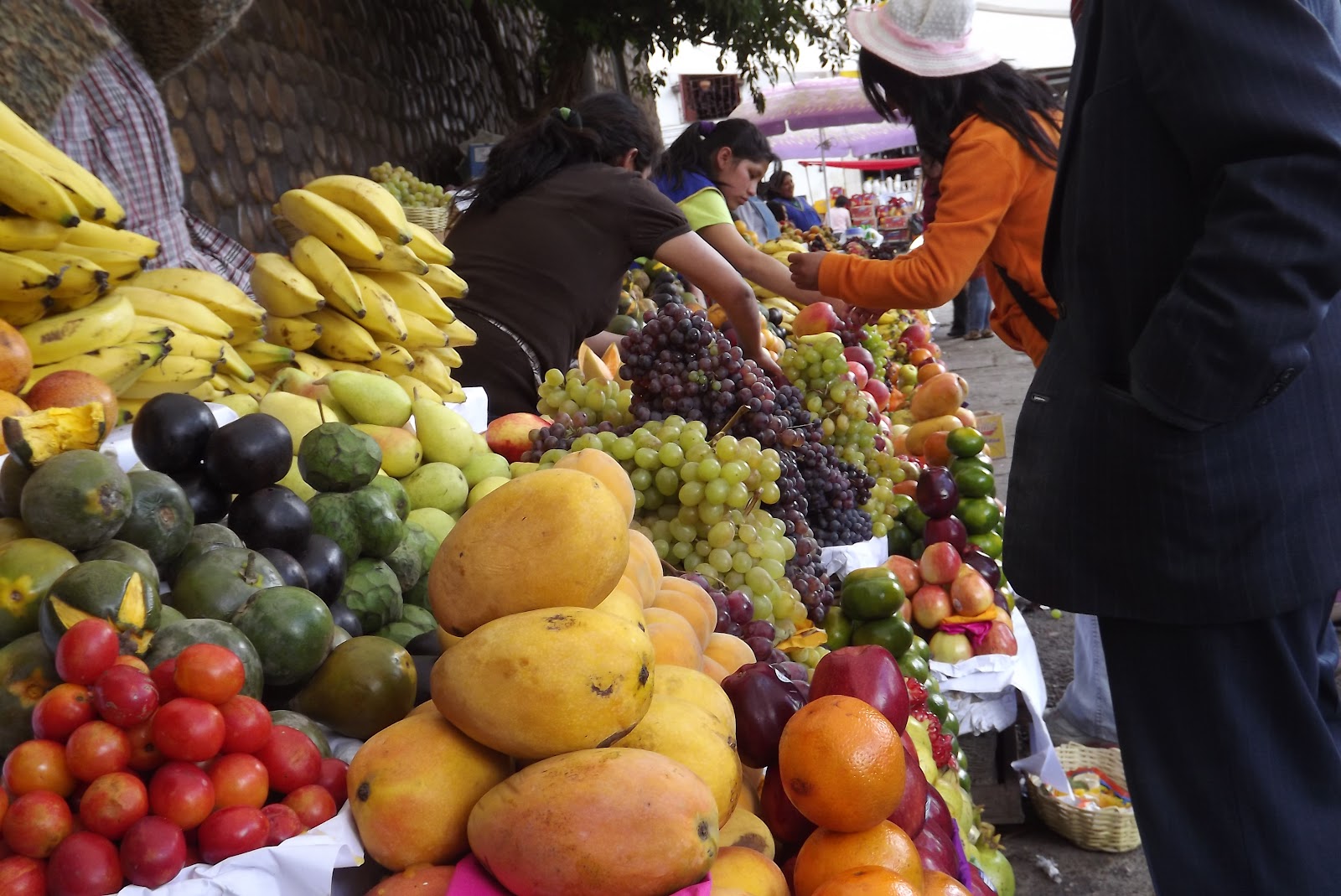
Ecuador is a small country, but dense with towns and folks at every turn. Whereas Bolivia and Perú might have a town every fifty kilometros or so, one tends to pass through around four or five towns/cities on a bike in a single day in Ecuador. Some of these places are useless, like Guayaquil, which is very difficult to get in and out of in a bike and has little going for it besides mountains of cheap fried rice and the first Pizza Hut I've seen in a long time. In other towns, like Luz de America, you'll get pulled aside by a friendly family who'll take you to their gigantic garden to pick all the oranges, cacao and bananas that you can load onto your bike and show you how to chop and eat sugar cane. One quickly becomes overburdened with fruit on a voyage through this country. Trucks will pull up alongside me and start handing me bags of mini bananas or poka (they call it taxo over here) and I'll be hardpressed to find a space for all this goodness so I usually just eat it right there on the spot. I wrecked hard once when a farmer handed me a bag of mangos while I was heading downhill. Never again.
 |
| Tango dancers in old Quito |
 |
| La Compañia de Jesus - founded 1605! |
I rolled into Quito with no expectations, and so I was pleasantly surprised when I descended into a mountain mega-city with the kind of ancient edificios as one would find in Cusco but with nearly the same amount of public infastructure as SF (nearly). Quito is the very first South American city I've seen with bike lanes...partitioned bike lanes at that, as well as a pretty impressive public bus system. This past sunday, Ave. de Amazona (one of the major roads that bisects the city) was closed down to all road traffic except cyclists to celebrate the cities burgeoning bike culture. Mountain bikes are really big with the locals, what with all the cobble stone roads closer to old Quito. I actually wanted to get a new smooth tread street tire for my worn rear wheel over here, but the only kind of tire the shops carry around here are kevlar crusted juggernaut rings of rubber destruction...so now DreamCrusher is half monster truck I guess.
 |
| Church of San Francisco |
 |
| National Basilica |
Quito sports a monster collection of museums, and has by far some of the best collections of art and pre-Columbian artifacts I've seen in my entire trip...and I've visited probably a third of the these places (Museo de Arte Contemporaneo, Casa del Alabado, and Museo de Guayasamín) so there's plenty more to see. Taking photos will quickly get you kicked out of any of these places, so unfortunately I can't share the goods with you folks back home unless your one of the few lucky folks I've promised postcards to. One of the lesser known museums in the city is Museo de Guayasamín, a museum located in the Northeastern hills dedicated to contemporary Ecuadorian artist Oswaldo Guayasamín. I had no idea about this guy until some roommates took me up to the museum the other day to have a look. The collection of various grotesquiries and artistic interpretations of Latin American oppression and social inequality is a revealing point of view of the regions troubled history and how shitty wikipedia is at articulating the human cost of various economic reforms spearheaded by terrible dictators and autocrats.


Discovery Channel Discovery of the Week - Women's Day
About a week ago was Women's Day in Ecuador, a day in which all the dudes are supposed to celebrate and reminisce on all the differences women have made in their lives. The fellas in Luz de America celebrated by getting slightly less shithoused at 11 pm and not snapping their finger or whistling for the cook (always a lady) to bring another cervesa their way.
I've noticed that the living conditions for women in these parts, especially in the more rural areas of Bolivia, Perú, Ecuador, and even parts of Argentina, are pretty damn terrible. While this isn't news to anyone, it kind of gets me fired up when I roll into towns at noon or in the evening to get some food and see countless drunk jerkoffs stumbling aimlessly around the street, cursing at their daughters or their wives to get them another beer while the womenfolk dutifully fulfill any request these drunk bastards may have before going back to a windowless, unventillated kitchen to slave away for the rest of the day.
Motherhood, above all else, is considered the highest value of a lot of women in this part of the world, and if I've learned anything from all the pre-Columbian art exhibits, it's a cultural tradition that stretches back for thousands of years. It is an evil tradition that keeps the ladies in perpetual servitude to men who never learn to grow up, who stay in a permanent state of boyhood because women are doing pretty much everything for them. The guys can't wash their own clothes, can't clean their own house, can't cook food (the firefighters in Chiclayo called me a goat, which is Perúvian for faggot, because I was cooking up some rice and taters for myself instead of getting a woman to do it). Like, I don't understand why a lot of these women just don't start kicking some ass since they're usually doing twice the amount of physical labor and getting twice the amount of physical exercise as the lazy ass dudes I see in a lot of these towns that can't be bothered to do anything besides scratch balls and gossip in a rather gay fashion with all their other useless buddies. I'd go as far as to say that a lot of these fellas just straight up hate the company of women and don't want to associate with ladies beyond handing off plata for booze.
I'm no sociologist, nor am I the kind of person that should be standing
up to the powers that be and advocating for some dramatic social change,
but all these things I've observed up close, watching alot of stunning
ladies sequestered to the depths of the kitchen or working in fields
while their husbands/boyfriends ignore them to spend the day getting
drunk together and reminding each other how much they hate gays...I'd
say there's a just a lot of self-hating homos in these parts that are
trapped in a false visage of machismo. I guess it sucks for both
parties...women can't escape the chains of motherhood, and these dudes
can't bang eachother. I guess that equals things out...?
 |
| por ejemplo... |


 In no time, I was in Tumbes, almost the last stop in Perú, and passing over a border fenced off by an endless horizon of banana trees. In this flat coastal land, you can actually smell Ecuador before you see the first sign for the border checkpoint. You know you're close when that sweet delicious smell of rotting fruit fills your lungs. Upon laying thine eyes upon this land ripe with growth of every sort...I don't know how to describe the sensation. I guess I felt right at home. Herzog might have wished at one point for this place to shrivel up and die, but I can't help but notice some paleo-nostalgia when I roll through this jungle paradise. We're all howler monkeys at heart, aren't we?


 I was eager to get up to Cerro de Pasco, a town separated from the city of Huancayo by a three and a half day climb that promised to be the last time I would have to make a 4600 mts ascent before heading down to the jungle lands of Huanuco, followed by the province of San Martin. From Jauja to Cerro de Pasco, my heels cracked in a hundred pieces like baked clay due to the dry climate. Temperatures along the route dropped to below freezing levels despite the fact that it's summer out here, and breathing the air this altitude was a little tough. Sleep was scarce, especially in Cerro de Pasco, where I got fleas in a hostal bed. At least the free breakfast was good (mint soup with taters).



 I almost forgot...La Union was a blast. This small mountain town just so happened to be celebrating it's carnaval when I was dropped off near the center of town. However, since the cold mountain air was not the kind of environment where one would find sexy ladies shaking their booties and boobies around in string bikinis, the whole event turned out to be one giant water fight instead. The main attraction was the large gathering of evil ghosts (accompanied by a band) marching through the center of town in scary masks and ponchos, trying to scare little children and get a rouse out of the populace. For the next couple of hours, the local people took a stand against satan by pelting his minions with water balloons, flour, and checha from high balconies while the minions danced their evil jig in the streets. As I was the only gringo in 200 km's or so, I was quickly pulled into the fray by a drunk old lady, had my face and arms smeared with chalk, and thus channelled the fiendish spirit of some kind of gringo baby stealing ghost. For the next thirty minutes, I danced a hellish salsa with my ghoulish old lady around town, all the while trying the best I could to dodge water balloons and other projectiles. It was all in good fun, and I hope to see my face in the local newspaper in La Union, what with all the people wanting to take a picture with the baby eater.
 No need to mention the details of my climb to Huaraz...frozen to my bones, frozen water bottles, coagulating chain grease etc., not very enjoyable in general. But then came another record setting descent...a full day and half of down hill riding from Huaraz to just past Yuracmarca, and then some the next day all the way down to Chimbote, but of differing degrees of quality. Huaraz to Caraz was excellent forest drifting with potable water on the side of the road and excellent fried fish in Caraz...
 ...then came Mordor, or the Caraz-Chuquicara leg of the descent, where plant life shriveled into pulverized dust and the river turned an ugly shade of gray. Although I have faced dirt roads many times before in Andahuaylas and Ayacucho, road conditions here wreaked havoc on my wrists and ass. This was not loose gravel or pressed dirt...large stones were deep set into the route with absolutely no give while other sharp stones were scattered about the path to sheer away the sides of my tires if I made a sharp turn. This was two and a half days of very painful riding and very little progress, and as I crept along closer to the mountain base, the headwind became all the more potent, and I was forced to dismount several times before reaching Chuquicara. Oh, also some young punks in Yuracmarca with the lamest super saiyan haircuts that have ever graced the pates of cro-magnons thought they might dismount me by hucking perfectly ripe mangos in my direction. It turned out to be a good opportunity to collect some dinner and practice my insult spanish with some little bastards.


